 |  |  |  |  |  |
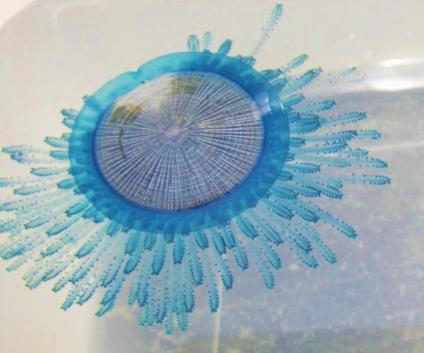
| Photo: Ellen McRae APR 2009 |
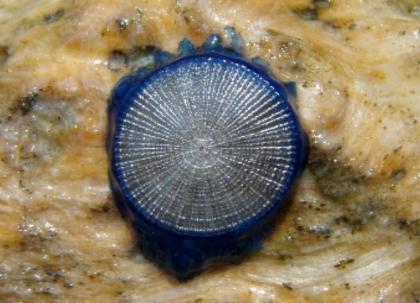
| Blue Button (Porpita linneana) |
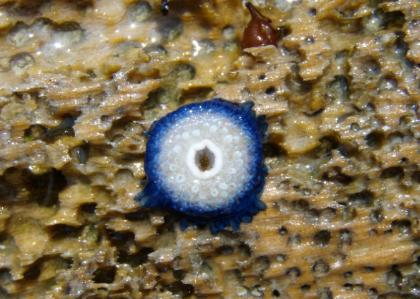
| Blue buttons were observed in Belize in April 2009 at Caye Caulker, Hopkins and at Glover's Atoll. They had been observed previously before in the early 90s at Hol Chan and in 2008 at Turneffe. The light blue specimen was photographed by Ellen McRae from SIWABAN on Caye Caulker. The darker blue specimens were photographed by Alex Tilley from the Wildlife Conservation Society's field station at Glover's Atoll. |
| Photo: Alex Tilley APR 2009 |
Blue Button (Porpita linneana)
| Blue buttons are colonial animals made up of individual polyps. |
| Photo: Alex Tilley APR 2009 |
 |  |  |  |  |  |
| ECO/ECOMAR is a charitable company registered under the laws of Belize. If you would like to help support any of our projects please make a donation today! |
17 Princess Margaret Dr. LF, PO Box 1234, Belize City, Belize
TEL: + (501) 671-3483, FAX: +(501) 223-7007
Email: linda@REMOVEecomarbelize.org, www.ecomarbelize.org
TEL: + (501) 671-3483, FAX: +(501) 223-7007
Email: linda@REMOVEecomarbelize.org, www.ecomarbelize.org
| | | | | |


| Conservation through Education! |
Animalia
Eumetazoa
Cnidaria
Medusozoa
Hydrozoa
Leptolinae
Anthomedusae
Capitata
Zancleida
Porpitidae
Eumetazoa
Cnidaria
Medusozoa
Hydrozoa
Leptolinae
Anthomedusae
Capitata
Zancleida
Porpitidae
| Scientific Classification |
Kingdom
Phylum
Subphylum
Class
Subclass
Order
Suborder
Infraorder
Family
Phylum
Subphylum
Class
Subclass
Order
Suborder
Infraorder
Family
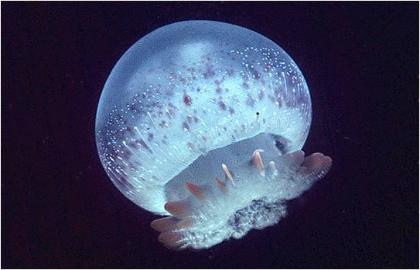
| From January to February 2007 large numbers of cannon ball jellyfish were sighted at dive sites 10 miles east of Belize City at Gallow's Point. While cannon ball jellyfish are reported from New known to be observed in Belize. Cannon ball jellyfish are a primary food item for migrating leatherback sea turtles, the largest and most endangered of sea turtles. |
Cannon Ball Jellyfish (Stomolophus meleagris)
Cnidaria
Rhizostomae
Stomolophidae
Stomolophus
meleagris
Rhizostomae
Stomolophidae
Stomolophus
meleagris
Phylum
Class
Order
Family
Genus
Species
Class
Order
Family
Genus
Species
| Scientific Classification |
| jellyfish. Commonly sighted "jellyfish" in Belize are the Cnidaria are a diverse group of animals found in abundance jellyfish. In early 2007 thousands of cannonball jellyfish in Belize. Most common Cnidarians include the corals and were observed on dive sites on the north central Belize Barrier Reef at Gallow's Point. Another rare sighting were Belize. If you see some unusual jelly like animals in the water please send in your photos. Great spots to observe large plankton is at Gladden Spit where Venus Girdles have been sighted. |
| APR 2009 Glover's Atoll |
| Gallow's Point |