The Belize Lionfish Project is currently receiving funding
from COMPACT (Community Management of Protected
Areas for Conservation) to conduct a multiactivity program
which includes monthly lionfish tournaments and outreach
programs aimed at educating stakeholders on the invasive
lionfish. The goal of the project is to ensure protection of
the Belize Barrier Reef Reserve System World Heritage
Site.
To faciliate delivery of lionfish by anglers into the Monthly
Lionfish Tournaments, weigh stations were established with
partners throughout Belize. These partners were key in
making the monthly tournaments a success. Prizes are
awarded to the Top Fishermen, Top Marine Guide, and
Top Boat for the months May through November 2010.
Grand Prizes will be awarded to the overall winner and the
Boat Category prizes is an outboard engine.
In 12 coastal communities Lionfish Outreach Workshops
will be held and particpants receive a Lionfish packet with
stickers, fact sheet, puzzle page and posters all about the
lionfish. Many of the materials have been produced in
Enlgish and Spanish.
A documentary is also being produced that will document
the history of the invasive lionfish in Belize and what
everyone can do to keep numbers of lionfish low on our
reefs. The traditional sailboat fishermen are marksmen
when it comes to shooting these lionfish and are ready to
help manage the invasve lionfish in order to protect the
traditional species that are harvested in Belize.
from COMPACT (Community Management of Protected
Areas for Conservation) to conduct a multiactivity program
which includes monthly lionfish tournaments and outreach
programs aimed at educating stakeholders on the invasive
lionfish. The goal of the project is to ensure protection of
the Belize Barrier Reef Reserve System World Heritage
Site.
To faciliate delivery of lionfish by anglers into the Monthly
Lionfish Tournaments, weigh stations were established with
partners throughout Belize. These partners were key in
making the monthly tournaments a success. Prizes are
awarded to the Top Fishermen, Top Marine Guide, and
Top Boat for the months May through November 2010.
Grand Prizes will be awarded to the overall winner and the
Boat Category prizes is an outboard engine.
In 12 coastal communities Lionfish Outreach Workshops
will be held and particpants receive a Lionfish packet with
stickers, fact sheet, puzzle page and posters all about the
lionfish. Many of the materials have been produced in
Enlgish and Spanish.
A documentary is also being produced that will document
the history of the invasive lionfish in Belize and what
everyone can do to keep numbers of lionfish low on our
reefs. The traditional sailboat fishermen are marksmen
when it comes to shooting these lionfish and are ready to
help manage the invasve lionfish in order to protect the
traditional species that are harvested in Belize.
The introduction of lionfish into the Wider Caribbean Sea
is believed to have originated South Florida when several
lionfish were known to have been released into the sea.
The shallow tropical waters of the Bahamas has
witnessed a population explosion over a period of 4 years
between 2004 and 2008. Bahamian fishermen are now
harvesting lionfish for consumption since they are among
the largest fish in the sea.
Lionfish are voracious predators and can consume
almost 80% of juvenile fish recruits including the important
fishery export products like snappers and groupers, and
parrotfish, which help keep the coral reefs clean of algae.
Lionfish are also known to eat crustaceans, like the spiny
lobster. In 30 minutes a lionfish was observed eating
more than 20 fish!
Many countries in the Caribbean are developing
response plans to mitigate the negative impacts lionfish
may have on native fish populations and the coral reef
ecosystems. ECOMAR is working with the National
Coral Reef Monitoring Network's Lionfish Committee on
developing a National Lionfish Management Plan that will
be presented to stake holders throughout Belize at the
Lionfish Outreach Workshops.
All Reef Regulars - fishermen, divers and snorkelers - are
being encouraged to capture and or report all lionfish
sighted.
is believed to have originated South Florida when several
lionfish were known to have been released into the sea.
The shallow tropical waters of the Bahamas has
witnessed a population explosion over a period of 4 years
between 2004 and 2008. Bahamian fishermen are now
harvesting lionfish for consumption since they are among
the largest fish in the sea.
Lionfish are voracious predators and can consume
almost 80% of juvenile fish recruits including the important
fishery export products like snappers and groupers, and
parrotfish, which help keep the coral reefs clean of algae.
Lionfish are also known to eat crustaceans, like the spiny
lobster. In 30 minutes a lionfish was observed eating
more than 20 fish!
Many countries in the Caribbean are developing
response plans to mitigate the negative impacts lionfish
may have on native fish populations and the coral reef
ecosystems. ECOMAR is working with the National
Coral Reef Monitoring Network's Lionfish Committee on
developing a National Lionfish Management Plan that will
be presented to stake holders throughout Belize at the
Lionfish Outreach Workshops.
All Reef Regulars - fishermen, divers and snorkelers - are
being encouraged to capture and or report all lionfish
sighted.
| WHY LIONFISH POSE A THREAT TO THE BELIZE BARRIER REEF & TRADITIONAL FISHERIES |
| To receive a free Lionfish Toolkit which includes a Lionfish Fact Sheet and a net, please contact ECOMAR. |
| LIONFISH HUNTER TOOLKITS AVAILABLE FOR REEF REGULARS |
| If you would like to make a donation to the Lionfish Project please call 671-3483 or email linda@ecomarbelize.org. All donations will be used in the production of the Lionfish Toolkits. Additional rewards are also being accepted by companies wishing to make cash or item donations for our monthly tournaments. |
 |  |  |  |  |  |
 |  |  |  |  |  |
| ECO/ECOMAR is a charitable company registered under the laws of Belize. If you would like to help support any of our projects please make a donation today! |
| 17 Princess Margaret Dr. LF, PO Box 1234, Belize City, Belize TEL: + (501) 223-3022 Email: info@ecomarbelizedotorg www.ecomarbelize.org |
| Conservation through Education! |

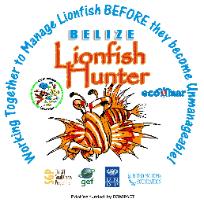
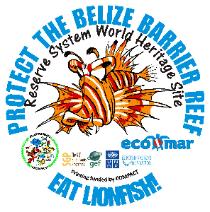
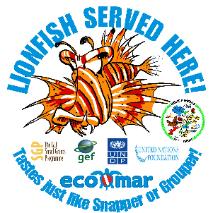
| Stickers and T-shirts carried these important messages and are distributed to fishermen, marine guides and others who particpated in the Lionfish Outreach Workshops. The "Lionfish Hunter" t-shirt is only given out to those anglers who have entered lionfish into the tournament and are can proudly boast the title of "Lionfish Hunter." |


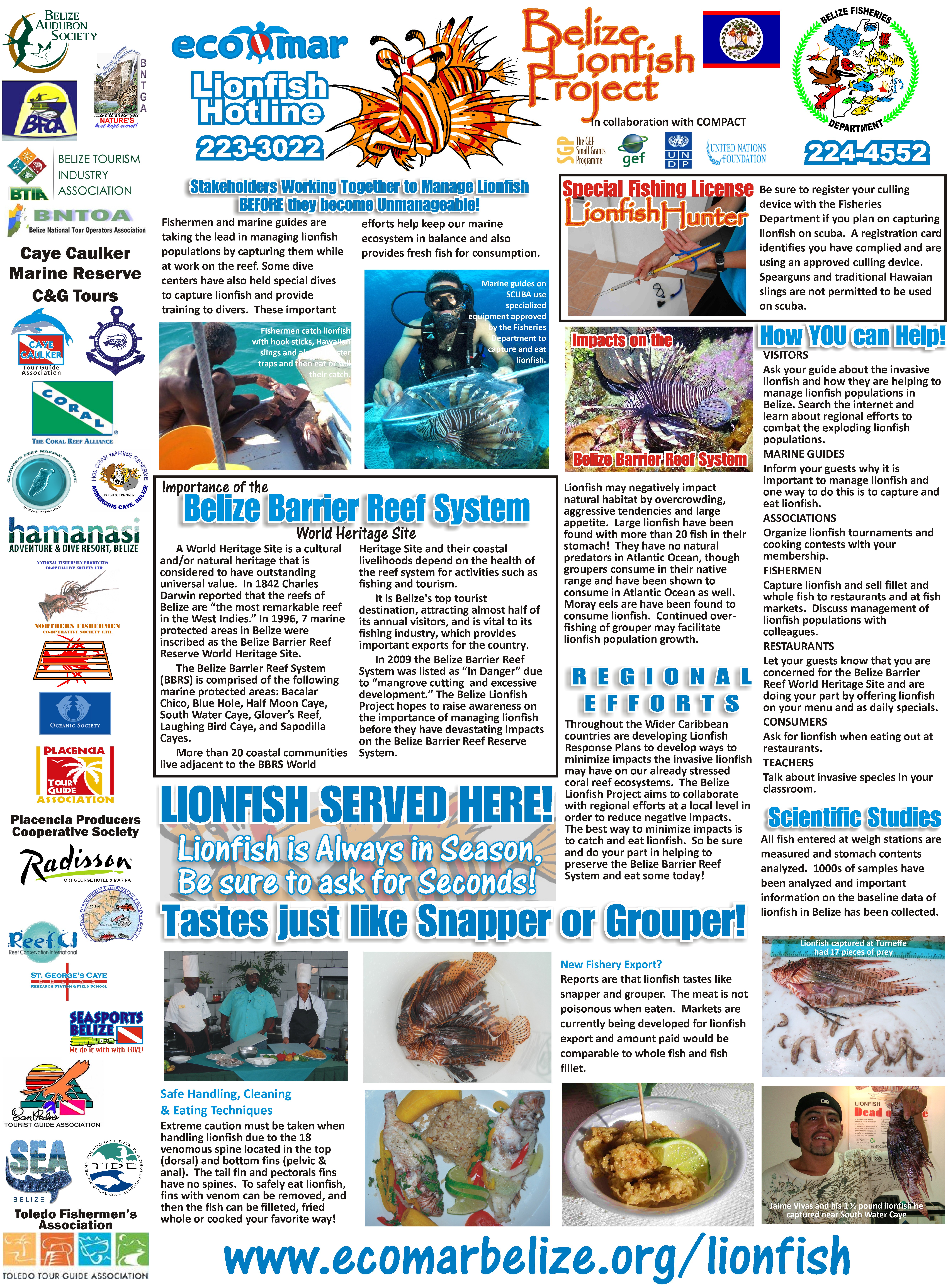
| This poster is available as a JPG file. Just click the poster to download |
HISTORY OF LIONFISH OBSERVED IN BELIZE
For the first six months the numbers of lionfish sighted
in Belize were recorded and their history is presented
on the pages below. Click these pages if you are
interested in learning more about where the first lionfish
were being observed. Initially the northern part of
Belize including Ambergris Caye and Turneffe and
Lighthouse Atolls were infested with larger numbers of
lionfish and towards the end of 2009 they were being
sighted in southern Belize.
For the first six months the numbers of lionfish sighted
in Belize were recorded and their history is presented
on the pages below. Click these pages if you are
interested in learning more about where the first lionfish
were being observed. Initially the northern part of
Belize including Ambergris Caye and Turneffe and
Lighthouse Atolls were infested with larger numbers of
lionfish and towards the end of 2009 they were being
sighted in southern Belize.